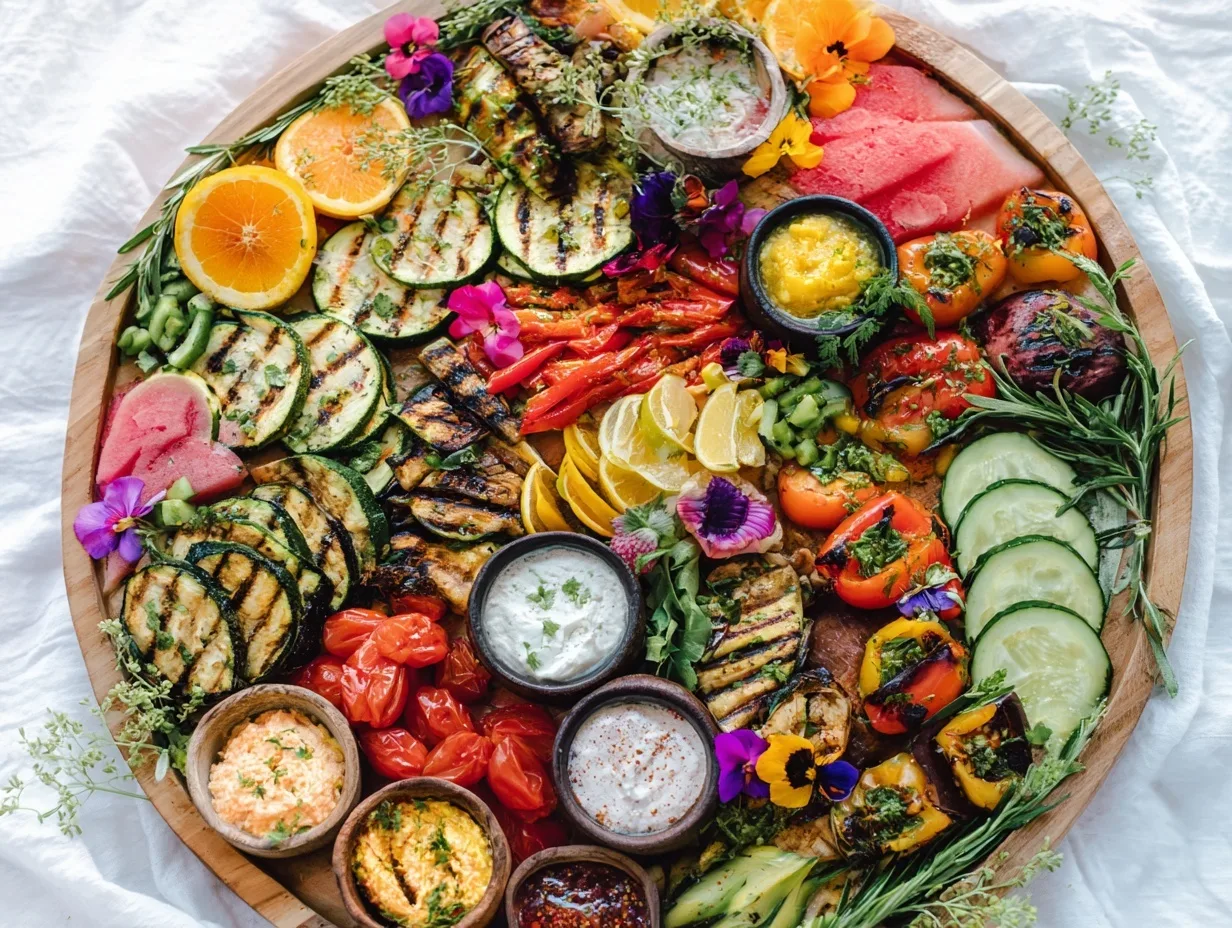
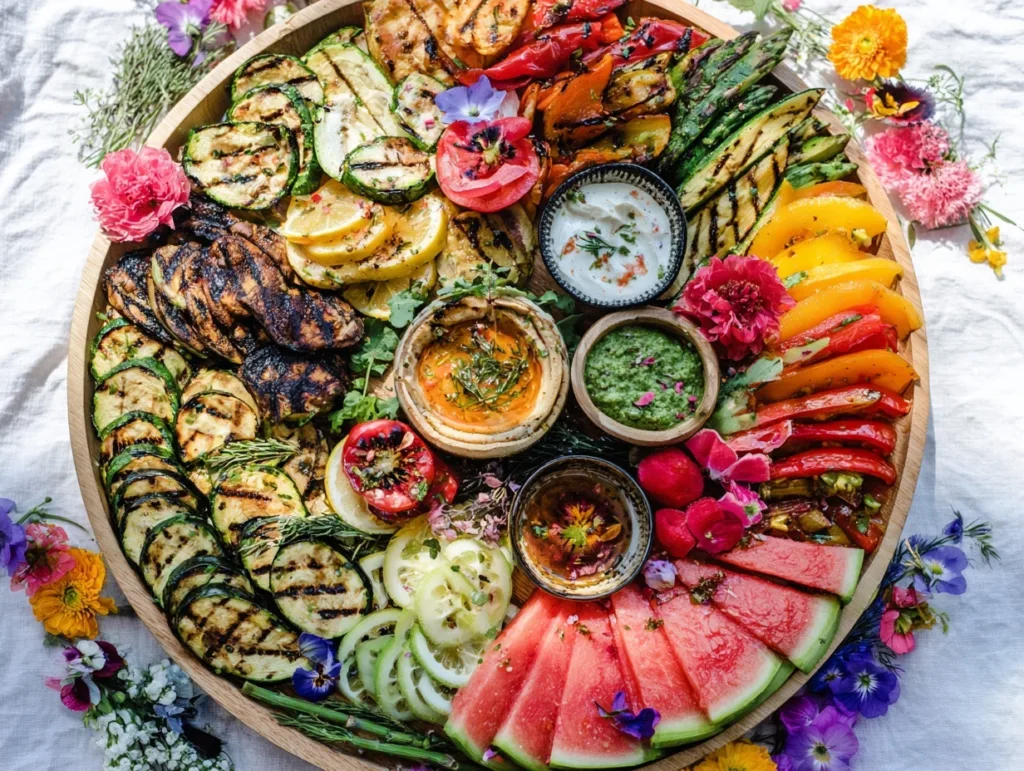
Crisp, caramelized roasted vegetables meet the art of the modern snack board. This Vegetarian Charcuterie Board with Roasted Veggies is vibrant, warm, and nutrient-packed — the kind of dish that looks straight out of a restaurant spread but comes together in under an hour. With every bite, you’ll taste the perfect balance of smoky edges, natural sweetness, and herby flavor — no meat, no fuss, just pure fuel for your body and your day.
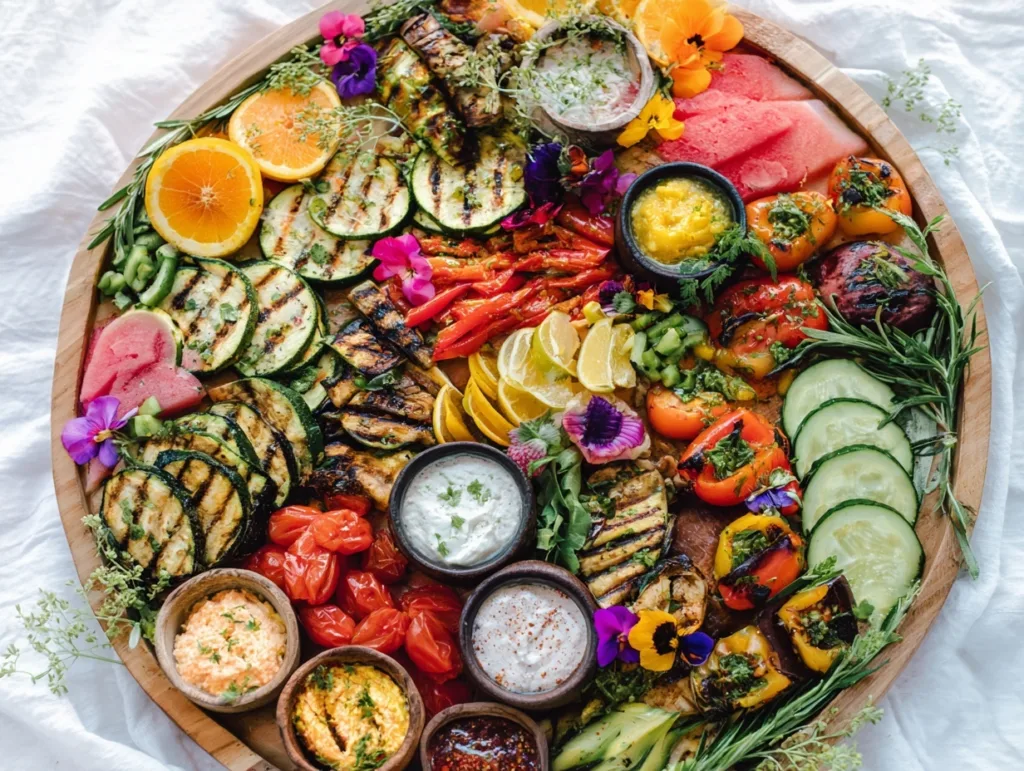
Creating a protein-forward vegetarian board isn’t just about presentation — it’s about nourishment that excites. I still remember the first time I swapped the usual cheeses and cured meats for roasted veggies. It was a fall evening after training, the kind where your body craves warmth and color. I’d spent all week meal-prepping lean proteins, so I wanted something different — hearty, clean, and vibrant. I opened the oven, tossed together broccoli florets, bell peppers, red onions, and squash with olive oil and herbs, and watched them transform into golden, flavorful bites. When I laid them out next to hummus, grilled zucchini, and a few colorful dips, it didn’t just look satisfying — it felt like balance.
That’s what this Vegetarian Charcuterie Board with Roasted Veggies delivers: energy, variety, and simplicity. Whether you’re serving it for a family gathering, post-workout meal, or a casual weekend dinner, it hits the sweet spot between healthy eating and culinary pleasure.
For the perfect char on those veggies, I always reach for my Lightyear Silicone Basting & Pastry Brush Set (2-Pack) — the heat-resistant bristles coat each vegetable evenly, locking in that herbed flavor without sticking or burning. And if you love a hands-on cooking experience, grab a sturdy pair of TOWINGO 9-Inch Silicone Kitchen Tongs — they make flipping those veggies in the oven simple and precise.
This recipe also complements some of my favorite comfort sides, like Brown Sugar Glazed Sweet Potatoes, Classic Turkey Stuffing, and 5-Star Creamy Corn Casserole — perfect if you’re building a full, colorful spread.
Explore the Steps
Building the Perfect Veggie Base
Every great Vegetarian Charcuterie Board with Roasted Veggies starts with thoughtful preparation. Your base isn’t just a pile of vegetables; it’s a symphony of texture, flavor, and color. I like to think of this as performance fuel disguised as a party platter — high fiber, loaded with micronutrients, and surprisingly satisfying.
Choosing Your Vegetables
Start with variety. You want contrast — soft roasted squash against crisp broccoli, charred bell peppers beside sweet onions. My go-tos are:
- Broccoli and asparagus for crunch and green vibrancy
- Red and yellow bell peppers for color and a hint of sweetness
- Red onions for that caramelized bite
- Yellow squash or zucchini for a tender base layer
Lay them out on a large baking sheet and give them breathing room — overcrowding steams instead of roasting. That golden crisp edge you see in the photos? That comes from high heat, patience, and airflow.
Seasoning Like a Pro
Olive oil, sea salt, cracked pepper, and a sprinkle of herbs are your foundation. Add smoked paprika or garlic powder if you want depth. Use your Lightyear Silicone Basting Brush again to coat everything evenly — the even glaze ensures consistent roasting and helps the herbs stick.
The Roast
Set your oven to 425°F (218°C). That’s the sweet spot for caramelization without burning. Roast for 20–25 minutes, flipping halfway through with your TOWINGO Kitchen Tongs until edges are golden and crisp.
While your veggies roast, set out a few complementary dips or sauces. Try hummus, basil pesto, or a tangy Greek yogurt herb blend. You can even pull inspiration from our Fall Harvest Charcuterie Board Ideas — where layering textures and seasonal flavors transforms a simple board into an experience.
When the vegetables come out glistening and tender, let them rest. That quick cool-down time helps the natural sugars settle, locking in sweetness and enhancing presentation. Then, it’s time to assemble.
Assembling Your Board Like a Pro
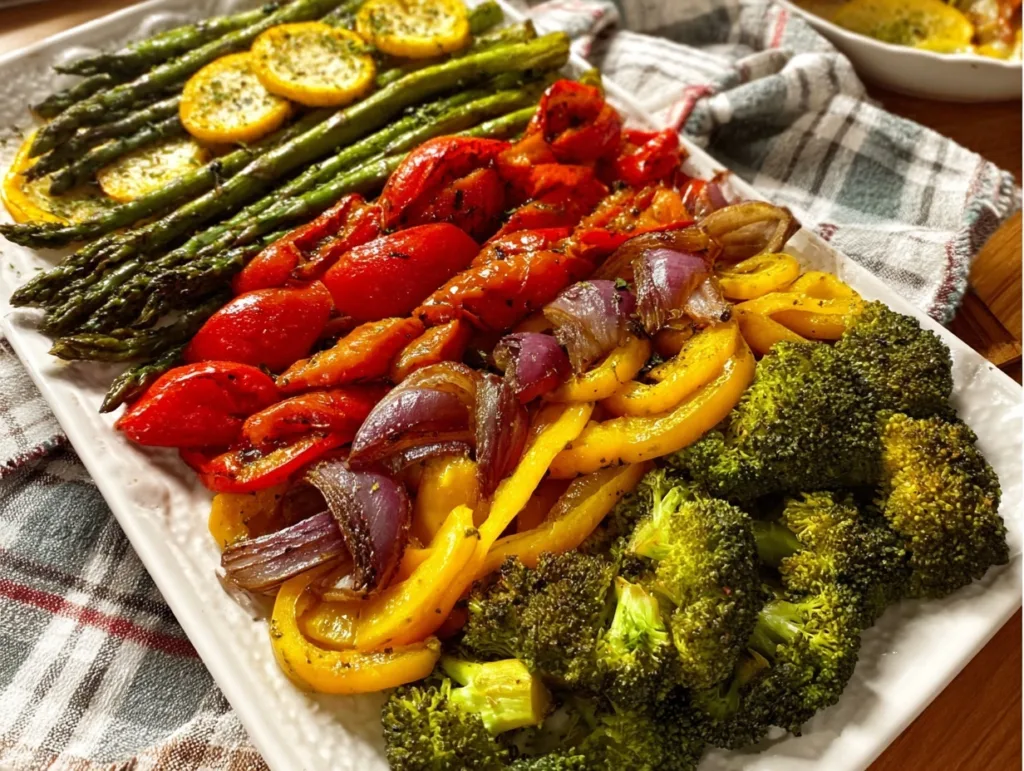
A Vegetarian Charcuterie Board with Roasted Veggies isn’t just food — it’s performance art on a plate. The secret to creating one that impresses is balance: color, texture, and shape. Each element plays a role, from the char on your roasted peppers to the creamy swirl of hummus in the center.
I like to start by setting the mood. If it’s a cozy evening with friends, I spread a plaid napkin under a large wooden board — the kind that feels rustic yet intentional. Then I anchor the layout with the warm, caramelized vegetables fresh from the oven. Their roasted aroma instantly pulls people in. I often hear, “What’s that smell?” long before the platter hits the table.
Step 1: Create Your Anchors
Think of the board like a training circuit — structured but full of movement. Place your bowls of dips first: classic hummus, vibrant basil pesto, and maybe a smoky roasted red pepper dip. Each one should sit like a hub for surrounding ingredients. Try using small ceramic bowls or ramekins so the colors pop.
Then, arrange your roasted vegetables in sections around them. Start with deep greens like broccoli and asparagus for grounding color. Layer yellow squash next, then slide in your jewel tones — red onions, bell peppers, and charred zucchini slices. The variation in color creates visual flow and keeps the board exciting to the eye.
Step 2: Add Raw and Grilled Elements
To make your spread dynamic, mix roasted with raw or grilled elements. Add cucumber rounds, cherry tomatoes, or even lightly grilled corn slices for a touch of freshness. This contrast keeps the flavor palette lively and ensures your guests get a mix of crisp and soft bites.
For inspiration, check out the Thanksgiving Veggie Board Ideas — it shows how to pair cooked vegetables with raw, seasonal produce for extra depth.
Step 3: Incorporate Protein-Boosting Dips
Even though this is a vegetarian board, you can still make it protein-rich. My go-to addition? Greek yogurt dips mixed with tahini or white beans — creamy, satisfying, and packed with amino acids. These options pair perfectly with roasted veggies, giving you long-lasting energy and satiety.
If you want to take it up a notch, try blending your own high-protein dips inspired by my 5-Step High-Protein Pumpkin Pancakes Recipe — using ingredients like cottage cheese or chia seeds for a similar nutrient balance.
Step 4: Finishing Touches
The final details make the board feel intentional. Sprinkle chopped herbs like dill or parsley over the top for color. Add a drizzle of olive oil for shine, or a pinch of flaky salt for texture.
I always finish my boards using the NileHome Stainless Steel Whisk Set (3-Pack) to quickly blend dressings and glazes — it keeps everything emulsified without clumping. And when slicing bread or crusty baguette rounds to serve on the side, my Mercer Culinary Millennia 10-Inch Bread Knife never fails. It gives clean cuts without squishing the soft interiors, so presentation stays pristine.
Finally, step back and take in your work. The vibrant colors, roasted sheen, and dips gleaming in the center tell their own story — a story of health, balance, and creativity. This isn’t just a charcuterie board; it’s fuel that satisfies the body and the eye.
For more serving inspiration, the 5 Easy Budget-Friendly Snack Board with Dips post is a goldmine of pairing ideas that work beautifully with roasted veggies and light proteins.
Step-by-Step Serving Flow & Hosting Tips
Every time I bring out a Vegetarian Charcuterie Board with Roasted Veggies, there’s a moment of pause — guests admire the colors before anyone dares to take the first bite. That’s what you want: a board that looks like it belongs on the cover of a cookbook but feels welcoming and easy to enjoy. The trick? Smart serving flow and preparation timing.
Step 1: Roast in Stages for Perfect Texture
Roasted vegetables don’t all cook at the same pace. To get that ideal mix of caramelized edges and tender centers, cook in batches. Start with dense veggies like broccoli and onions for the first 15 minutes, then add peppers and squash later. This keeps each ingredient in its best form — never mushy, never underdone.
If you’re prepping for guests, roast everything in advance and store the veggies in airtight containers. Reheat them briefly in the oven before assembling the board so they regain their crisp edges. This trick has saved me countless times when hosting larger groups.
And if you’re pairing with side dishes, the 5-Step Mushroom Spinach Casserole is a perfect complement — creamy, savory, and easy to prepare alongside your roasted spread.
Step 2: Layout Strategy for Easy Serving
When I build my boards, I think like an athlete setting up for a routine — every move should be efficient. Place dips at opposite ends of the board so guests can reach easily. Then, alternate colors and textures to create flow. Arrange your roasted veggies in small overlapping rows, and scatter a few raw additions like grape tomatoes or cucumber ribbons for brightness.
Keep small serving tongs on the board so people can grab what they need without crowding. My go-to are the TOWINGO 9-Inch Silicone Kitchen Tongs — lightweight, durable, and gentle on delicate veggies.
You can see this layout strategy in action on my 5-Minute Kids-Friendly Mini Snack Board — a smaller, playful version of this recipe that keeps things neat and shareable.
Step 3: Maintain Temperature and Freshness
For gatherings, temperature is everything. Keep roasted vegetables warm by placing a baking stone or preheated tray under the board (just warm, not hot). If your event runs long, consider keeping a backup batch in the oven on low heat to refresh the board mid-meal.
For outdoor settings, balance warm items with fresh additions like grilled zucchini slices, cucumber spears, or sliced melon for hydration. This combination not only adds variety but also keeps guests coming back for another round.
If you want to add another texture dimension, browse through Sweet and Savory DIY Dessert Charcuterie Board — it’s a great example of how to balance warm, cool, and sweet in a single presentation.
Step 4: Hosting Like a Pro
Great hosting is about flow, not perfection. Set your board where guests naturally gather — near the kitchen island, by a window, or alongside a light snack station. Offer small plates and napkins, and encourage mixing flavors. Tell your guests to try roasted onions with hummus, or broccoli dipped in basil pesto.
I always keep my Escali Primo Digital Food Scale handy during prep — it helps portion everything precisely, ensuring every guest gets a balanced share without overloading the board.
When I coach clients on post-workout meals or party prep, I tell them the same thing: “Fuel should be fun.” This Vegetarian Charcuterie Board with Roasted Veggies is proof that nutritious eating doesn’t have to be repetitive — it can be colorful, flavorful, and social.
If you’re inspired to expand your menu, the Thanksgiving Meat and Cheese Board Ideas post offers visual pairing inspiration that works year-round, especially when adding vegetarian and high-protein twists.
Nutrition Breakdown & Benefits
When I create a Vegetarian Charcuterie Board with Roasted Veggies, my goal is simple — to fuel performance and recovery while making every bite count. Whether you’re training for endurance, lifting heavy, or just trying to eat cleaner, this board delivers the kind of nutrition that supports an active lifestyle without feeling restrictive.
Each ingredient is carefully chosen for its nutrient density and synergy with the others. You’re not just eating roasted vegetables; you’re building a balanced, satisfying fuel source that sustains energy and muscle repair throughout the day.
Macros at a Glance (Per Serving)
| Nutrient | Amount | Why It Matters |
|---|---|---|
| Calories | ~220 kcal | Perfect for light meals or pre-dinner appetizers |
| Protein | 9g | Supports muscle recovery and satiety |
| Carbohydrates | 25g | Provides steady energy from fiber-rich vegetables |
| Fat | 10g | Healthy fats from olive oil and hummus enhance absorption |
| Fiber | 8g | Keeps digestion smooth and energy balanced |
These numbers can shift depending on the dips or toppings you include, but the foundation remains clean and nutrient-dense.
Powerhouse Ingredients
- Broccoli – Rich in vitamin C, fiber, and plant-based protein. It’s also loaded with sulforaphane, known to support metabolism and recovery.
- Bell Peppers – Packed with antioxidants and vitamin A, they promote immune health and muscle repair.
- Onions – Contain quercetin, a compound that may reduce inflammation after training.
- Zucchini & Squash – Hydrating, low in calories, and high in potassium for muscle function.
- Olive Oil – A source of monounsaturated fats that keep the body’s systems running smoothly and help nutrient absorption.
As an athlete and chef, I always emphasize balance — a mix of macronutrients that support strength, focus, and endurance. This board embodies that principle.
For instance, pairing this recipe with something heartier like the Easy Broccoli and Rice Casserole Recipe or the 5-Step Street Corn Chicken Rice Bowl can turn it into a complete, post-training meal with a protein boost.
The Science Behind the Satisfaction
Roasting vegetables increases their natural sweetness through caramelization, which also enhances their antioxidant levels. According to studies published in the Journal of Food Science and Nutrition, moderate roasting improves flavor compounds without significantly degrading nutrients — especially when using healthy oils and proper temperature control.
If you’re meal prepping, portion your veggies into airtight containers using a Escali Primo Digital Food Scale for accurate serving sizes. This helps you maintain consistency across meals, whether you’re cutting, bulking, or simply keeping macros balanced.
And don’t forget — dips like hummus and Greek yogurt-based spreads aren’t just condiments. They’re rich in plant-based protein, calcium, and probiotics, which support digestion and gut health. Together with the fiber from the veggies, they create a meal that’s filling without weighing you down.
Allergen & Dietary Notes
- Gluten-Free: Naturally, as long as you avoid bread sides or use GF crackers.
- Dairy-Free Option: Stick with plant-based dips or hummus varieties.
- Nut-Free: Replace nut-based sauces with tahini or sunflower seed butter for a safe alternative.
Always consult a healthcare professional for personalized nutrition advice.
When I serve this board after a training session, I like to remind clients that real strength starts with how you refuel. And this board — rich, colorful, and full of life — is one of the easiest ways to stay consistent with your nutrition goals.
For a creative twist, try pairing it with the Cranberry Fig Charcuterie Board Ideas post — its sweet-and-savory flavor profile perfectly complements roasted vegetables for a balanced, seasonal finish.
Serving Ideas, FAQs & Recommended Products
A Vegetarian Charcuterie Board with Roasted Veggies is one of those dishes that never feels out of place. Whether you’re hosting friends, recovering from a workout, or putting together a clean weekday meal, it’s adaptable, nutrient-rich, and visually impressive. With the right structure and serving approach, it transitions seamlessly from casual snacking to centerpiece-worthy dining.
Serving Ideas
- Post-Workout Refuel Board: Pair the roasted veggies with high-protein dips like Greek yogurt pesto or cottage cheese hummus. Add boiled eggs or baked tofu on the side for an extra hit of protein.
- Holiday Spread: Add pops of color with roasted beets, purple carrots, and herb-roasted potatoes. Pair with 5-Star Loaded Hash Brown Casserole for a satisfying and festive plate.
- Summer Gathering: Balance warm roasted vegetables with crisp cucumber ribbons, cherry tomatoes, and a chilled beverage like Witch’s Brew Sangria Recipe for a fresh, vibrant pairing.
- Family Dinner Board: Include sides such as 5-Step Easy Chicken Enchiladas Recipe or 5-Star Sausage Stuffing Casserole to add heartiness for mixed-diet households.
- Vegetarian Holiday Centerpiece: Inspired by the Stunning Cornucopia Cheese Board Ideas, you can style your roasted veggie spread into seasonal shapes using colorful garnishes for presentation impact.
This board doesn’t just feed; it energizes. It’s a visual celebration of whole-food nutrition — perfect for anyone who wants to eat well without compromising flavor.
Frequently Asked Questions
Q1: How can I keep roasted vegetables from getting soggy on the board?
Roast at high heat (425°F) and give vegetables plenty of space on the pan. If prepping ahead, reheat in the oven before assembling. Avoid covering tightly, as trapped steam softens texture.
Q2: What dips go best with roasted vegetables?
Classic hummus, tahini-yogurt sauce, basil pesto, or spicy red pepper dip all complement roasted vegetables beautifully. For a creamy boost, mix Greek yogurt with lemon juice and garlic powder.
Q3: Can I make this board vegan-friendly?
Absolutely. Swap dairy-based dips for hummus, baba ghanoush, or avocado crema. Make sure to check all pre-made sauces for hidden dairy or honey.
Q4: How far in advance can I prepare this?
Roast vegetables up to a day ahead, store in the fridge, and reheat before serving. Dips can be made 2–3 days in advance and stored airtight. Assemble the board fresh just before serving for best presentation.
Q5: How can I make this board high-protein?
Include protein-heavy dips (Greek yogurt, white bean, or cottage cheese-based), or add toppings like edamame, chickpeas, or tempeh. Pair with recipes like the 5-Minute Cottage Cheese Flatbread Microwave for added balance.
Recommended Products
Lightyear Silicone Basting & Pastry Brush Set (2-Pack) – Ideal for brushing oil and herbs evenly over vegetables before roasting. Durable, heat-resistant, and dishwasher safe for easy cleanup.
TOWINGO 9-Inch Silicone Kitchen Tongs (Set of 3) – Excellent control when flipping veggies or serving from the board. Their locking ring design makes them easy to store.
Escali Primo Digital Food Scale – Perfect for weighing ingredients to keep macros consistent during meal prep or portion control.
Mercer Culinary Millennia 10-Inch Bread Knife – A sharp, serrated edge that glides through bread, baguettes, and even roasted squash without crushing texture.
NileHome Stainless Steel Whisk Set (3-Pack) – Great for whisking vinaigrettes or yogurt-based dips until perfectly smooth and airy.
Daniel’s Closing — Coach’s Notes
This Vegetarian Charcuterie Board with Roasted Veggies isn’t just a recipe — it’s a system for better eating. It reminds you that nutritious food can be beautiful, flavorful, and deeply satisfying. Whether you’re cooking for yourself or sharing with others, you’re not just plating vegetables; you’re fueling intention, consistency, and well-being.
Keep it simple, keep it colorful, and remember — balance is built one meal at a time.
Coach’s Notes.